








Sponsors



Partner












Z365" or "Festival all year round" is the new strategic point of the Festival in which converge investigation, accompaniment and development of new talents (Ikusmira Berriak, Nest); training and cinematic knowledge transfer (Elías Querejeta Zine Eskola, Zinemaldia + Plus, Filmmakers' dialogue); and investigation, disclosure and cinematic thought (Z70 project, Thought and Discussion and Research and publications).
 Calls for entries - 2026 Log-in to MY FESTIVAL
  Agenda Programme and tickets Search
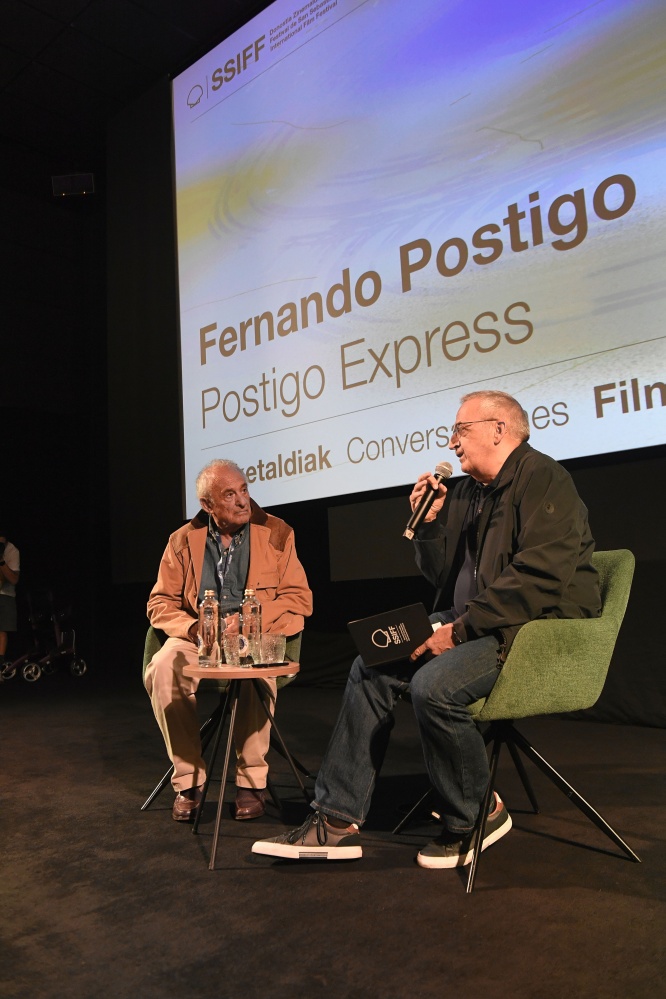
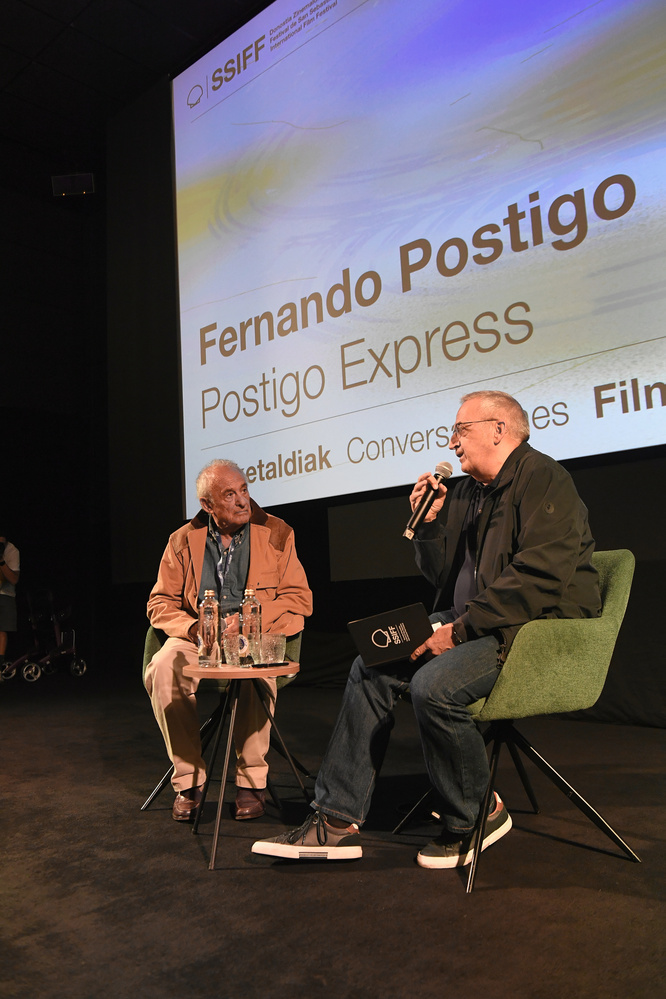
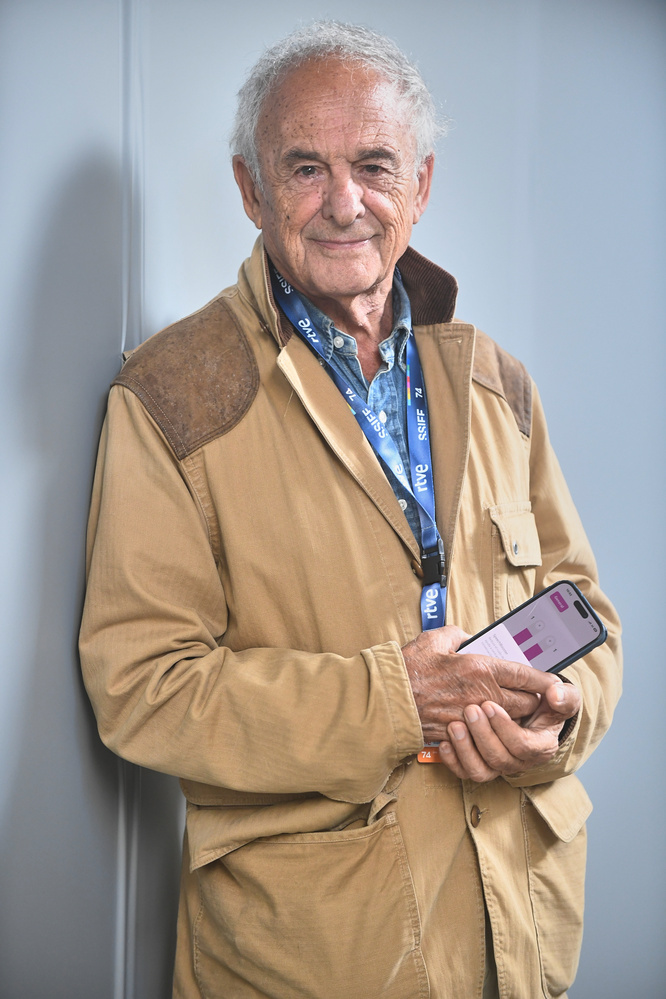
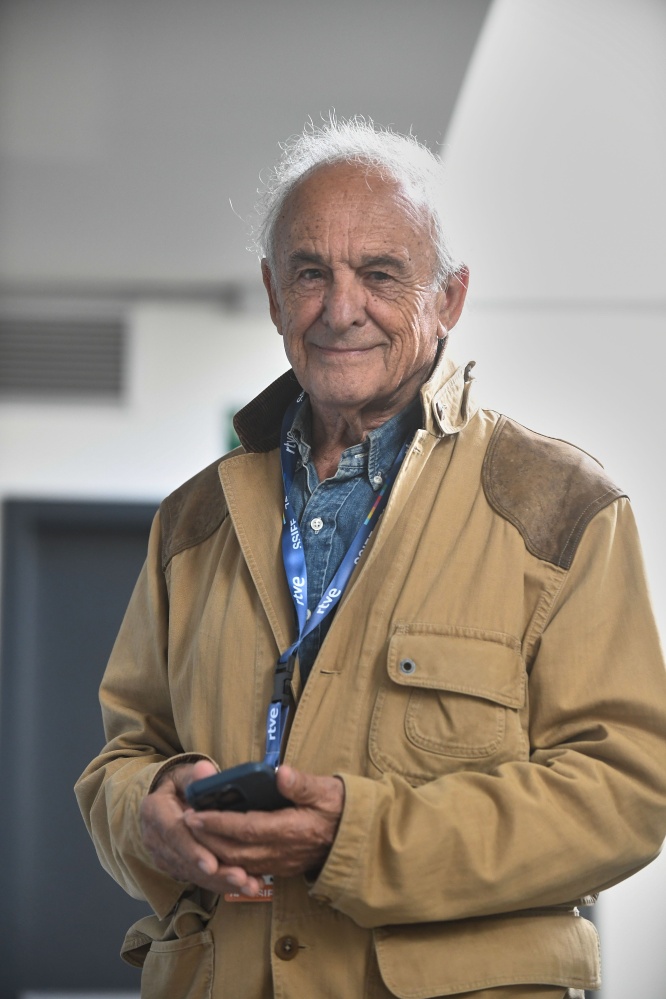
Fernando Postigo - Postigo Express
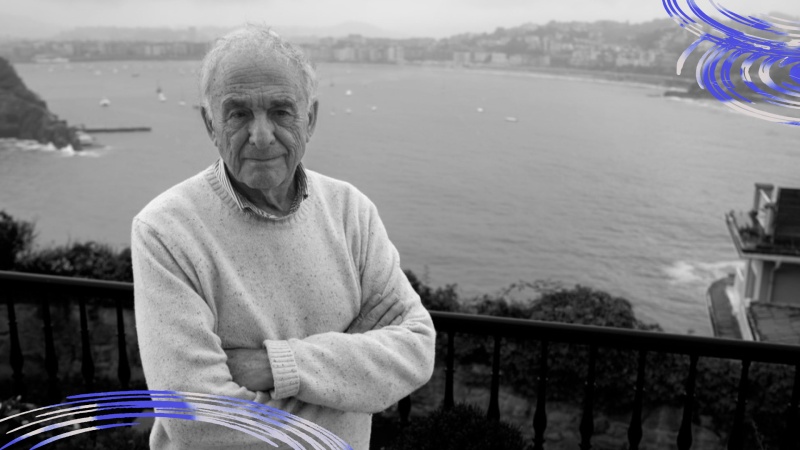
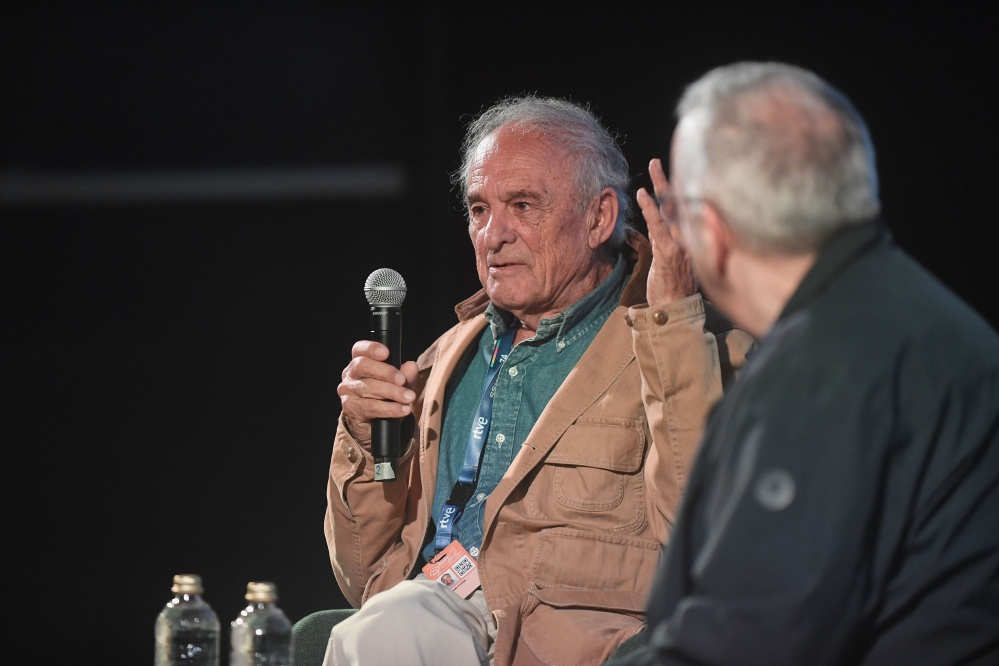
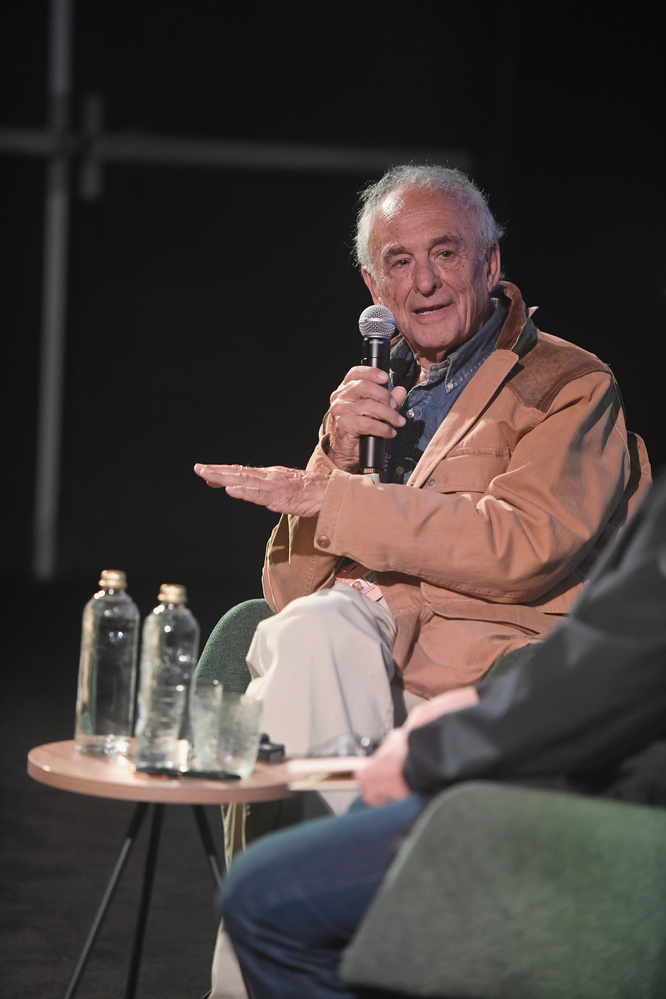
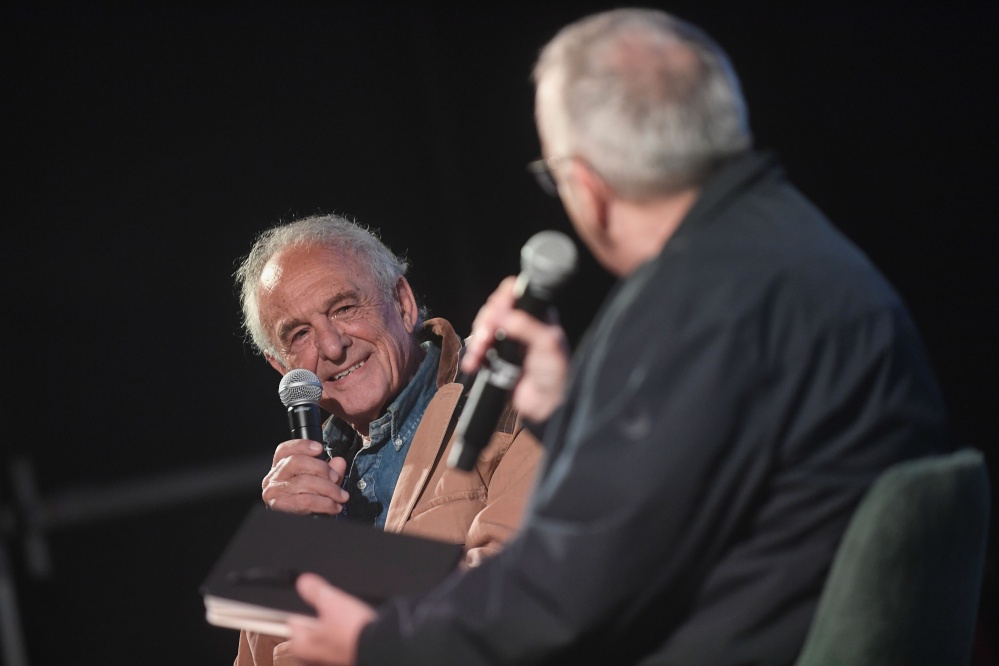
Fernando Postigo, one of the photojournalists who best documented the social and political life of Donostia during the Transition and the decades that followed, will look back on his career and his approach to the profession.
The conversation will explore his years working in the press, covering everything from terrorist attacks and demonstrations to press conferences and cultural events, as well as his work for the San Sebastian Festival, his memories and some of his most significant photographs. He will also reflect on the relationship between an artistic vision and the demands of daily newspaper work, and on the responsibility of building, image by image, an archive that bears witness to an era and can be passed on to future generations.
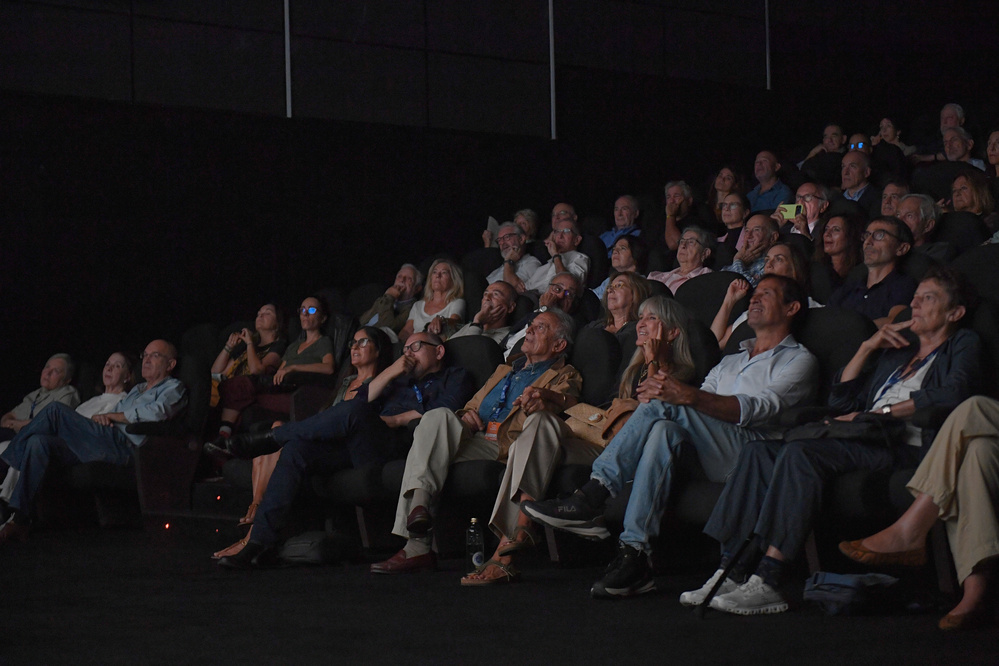
The session will begin with a screening of the short film Postigo Express, directed by Peter Decherney, who will then join the conversation to discuss the origins of the film and the process of working together.
Ricardo Aldarondo (San Sebastián, 1961) holds a degree in Information Sciences. He worked as a film and music critic and as a Culture editor at El Diario Vasco from 1986 to 2020. He is a regular contributor to the magazines Dirigido Por, Rockdelux, Nosferatu and Pickpocket, and has also worked as a critic for Fotogramas.
Since 2020, he has hosted and produced the podcast Discos Mon Oncle.
At the San Sebastián International Film Festival, he was a member of the management and selection committees (2000–2009), and served as Head of Communications (2008–2009).
He is the author of the books Doctor Zhivago / Bringing Up Baby (1997), The Barefoot Contessa / Double Indemnity (2000), Robert Wise (2005), and Key Films of Adventure Cinema (2008), and co-writer of the exhibition Backstage: Get In 1991–2021.
He has contributed to collective volumes including Merian C. Cooper and Ernest B. Schoedsack; Georges Franju; American Way of Death: American Film Noir 1990–2010; Don Siegel; Richard Brooks; Terence Davies. The Sounds of Memory; Henry King; Between Documentary and Fiction. The Cinema of Imanol Uribe; A Filmmaker Called Pedro Olea; Universal's Fantasy and Horror Cinema; German Fantasy and Horror Cinema (1913–1927); American Gothic, U.S. Horror Cinema 1968–1980; and Teen Spirit. A Journey Through Independent Pop.
Fernando Postigo was born on November 25, 1940, in San Sebastián. One of ten siblings, he grew up in a lively household near his parents’ fish shop, Ramonita. He often recalled a childhood in which children played freely in the streets, before cars took over the city.
He grew up in the Basque Country during the harsh years of repression that followed the Spanish Civil War under the dictatorship of Francisco Franco. Censorship, surveillance, and political persecution deeply shaped his upbringing and his awareness of the fragility of freedom.
He studied at the French School, Sagrado Corazón School, La Salle de Loiola, and the Donostia School of Commerce. In 1966, he met American student Mary Wildman. After they married, they moved to the United States, where Postigo studied Political Science at the University of Pennsylvania and worked as a social worker in Philadelphia. That experience strengthened his interest in the relationship between politics, power, and everyday life.
He remained in Philadelphia until Franco’s death in 1975 and returned to San Sebastián in 1977 with Mary and their children, Pablo and Jessica. That same year, he began his professional career as a photojournalist.
His first assignments were for La Voz de España, but it was at El Diario Vasco that he established his career. His photographs documented the Basque Country at a decisive moment: Spain’s transition to democracy, the escalation of ETA violence, and the deep political and social tensions running through Basque society.
Known for getting around by motorcycle, Postigo was often one of the first photographers to arrive at the scene of events. His camera recorded demonstrations, political rallies, funerals, attacks, and assassinations, but also the everyday life of a society under enormous strain.
He worked with Nikon cameras, often carrying two bodies at once and switching between wide-angle and telephoto lenses. He developed his own negatives. His archive, predominantly in black and white until 1991, reflects not only great technical skill but also an extraordinary journalistic instinct for recognizing when history was unfolding and which faces would ultimately bear its mark.
Today, the Fernando Postigo Photographic Collection constitutes a valuable record of a turbulent period in the contemporary history of the Basque Country, preserving the memory of a society undergoing profound transformation.



















Monday to Sunday from 09:00 to 14:00
and from 16:00 to 20:00