








Sponsors



Partner














Z365" or "Festival all year round" is the new strategic point of the Festival in which converge investigation, accompaniment and development of new talents (Ikusmira Berriak, Nest); training and cinematic knowledge transfer (Elías Querejeta Zine Eskola, Zinemaldia + Plus, Filmmakers' dialogue); and investigation, disclosure and cinematic thought (Z70 project, Thought and Discussion and Research and publications).
 Calls for entries - 2026 Log-in to MY FESTIVAL
  Agenda Programme and tickets Search
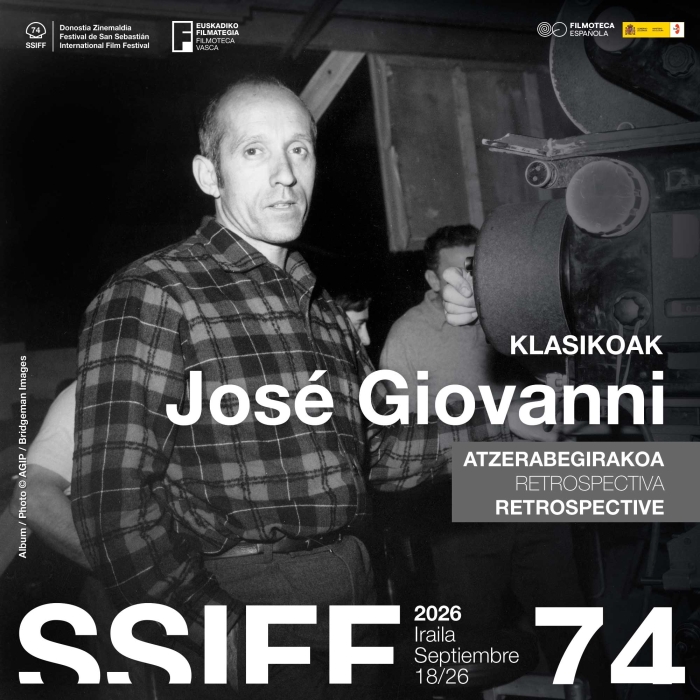


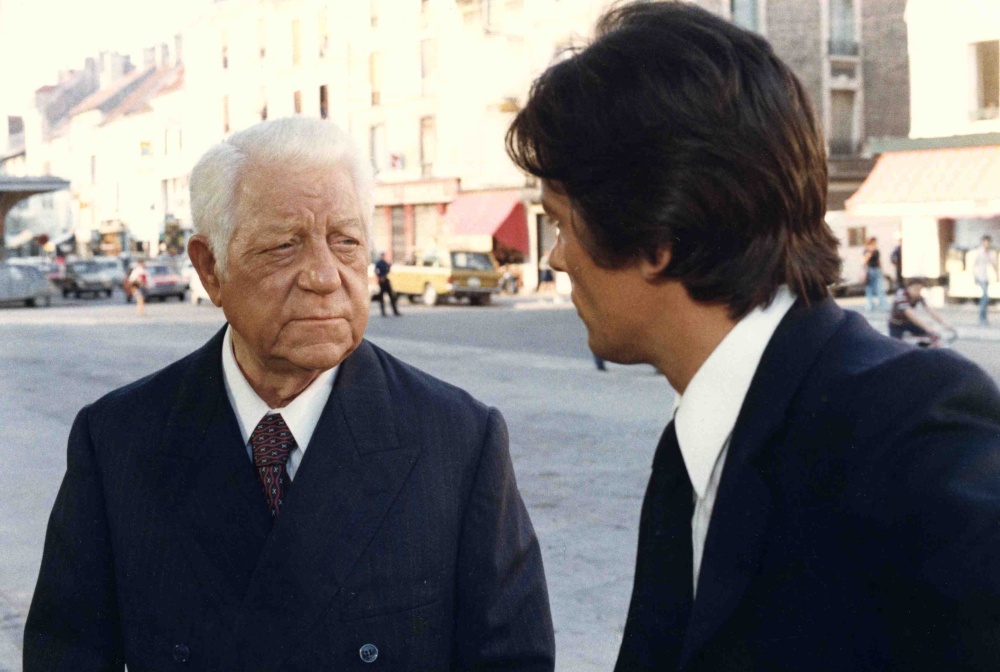
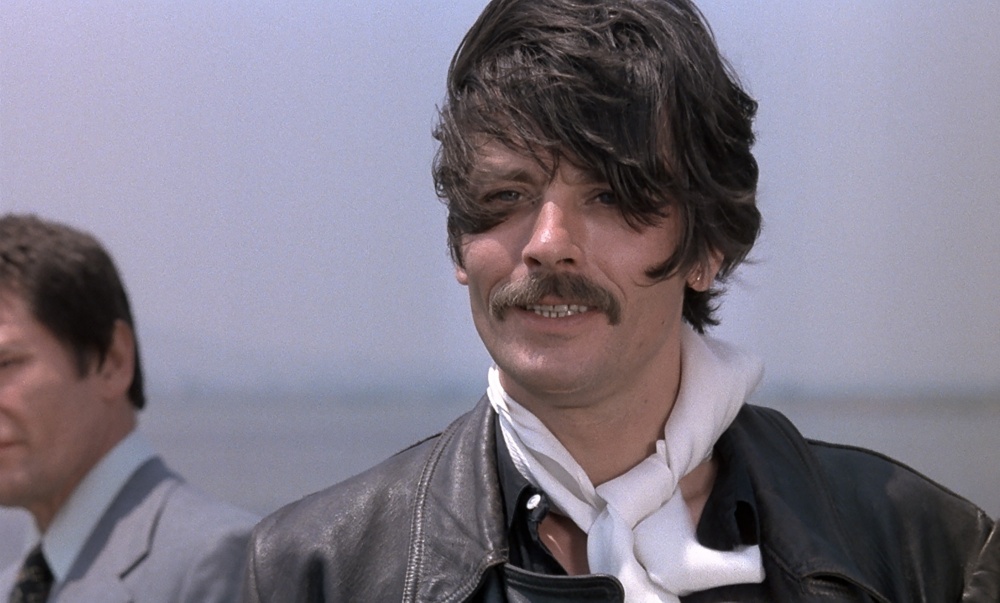
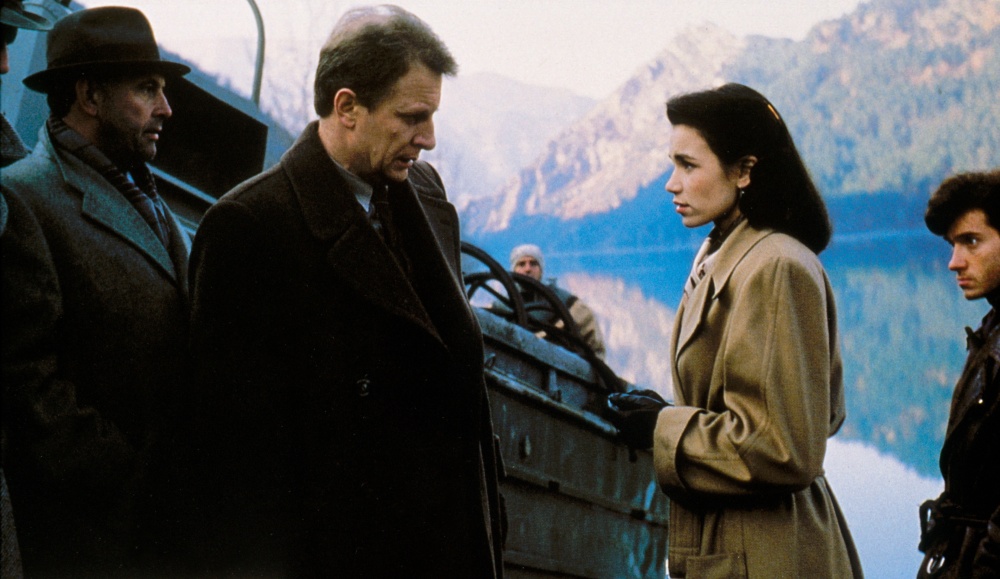
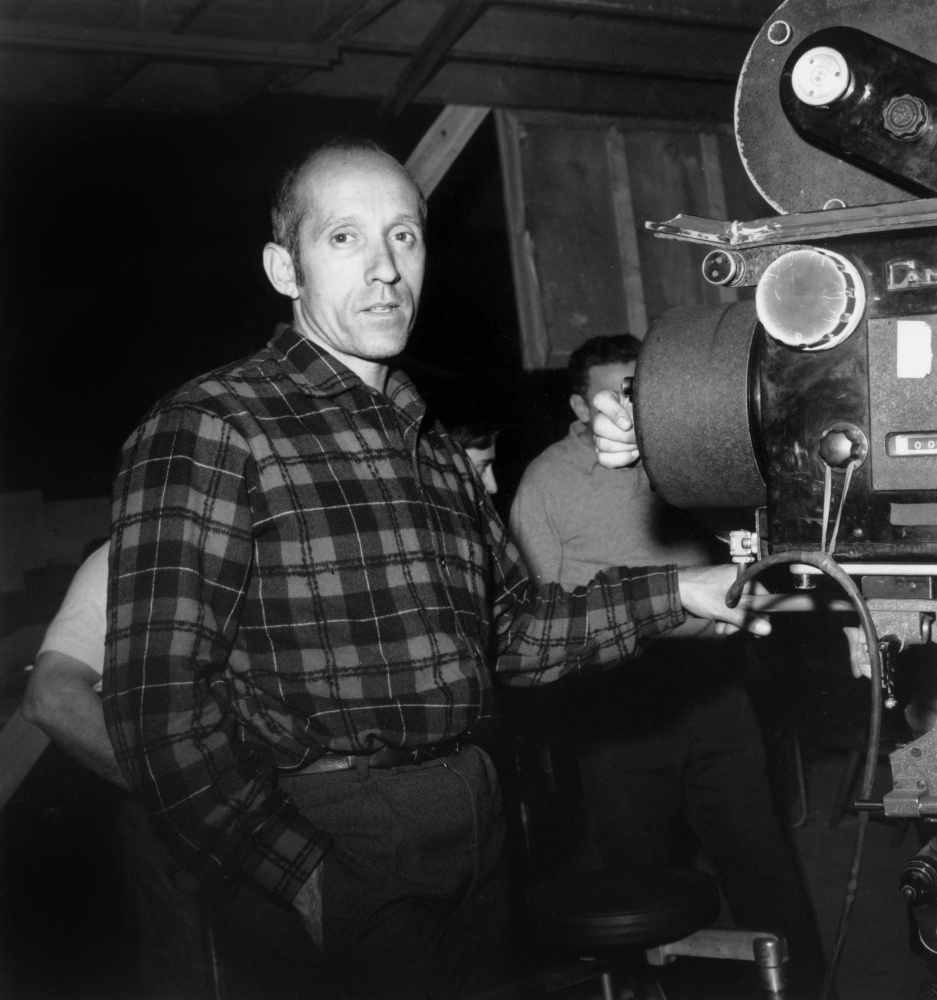
The French director, screenwriter and novelist José Giovanni, indisputable figure of the golden age of French crime films, is the protagonist of the retrospective at the San Sebastián Festival’s 74th edition. Organised by the Festival and the Filmoteca Vasca (Basque Film Archive) with the collaboration of the Filmoteca Española (Spanish Film Archive), the season will come with the publication of a book covering Giovanni’s complete body of work written by Felipe Cabrerizo.
José Giovanni (1923-2004), born Joseph Antoine Roger Damiani in Paris, into a well-off family of Corsican origin, wrote some of the first-rate pages of French crime movies and the police thrillers known as polar, as influential as the North American film noir. Having been a novelist, screen adapter and writer, it was when he took up the reins of his own directorial projects that he injected a gaze and an aesthetic to French police films on a par with those of its most celebrated authors, Jean-Pierre Melville and Jacques Deray. He worked closely with both at one stage, the first half of the 60s, when listing Giovanni’s name in the credits meant sure-fire interest and success at a time when the film policier was firmly rooted in the world of French cinema.
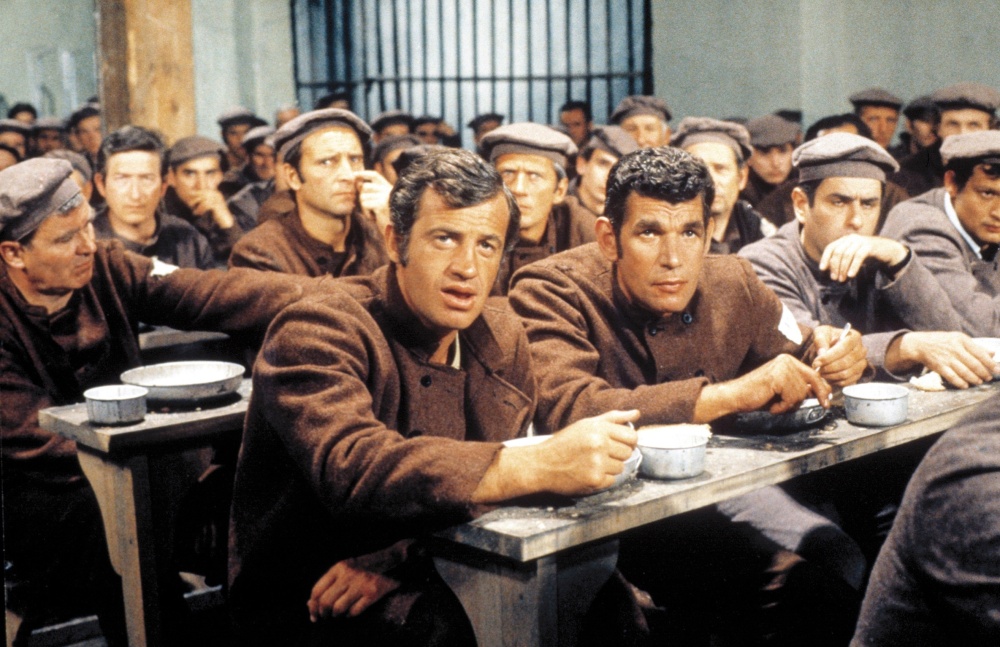
His was a hectic and complicated life, replete with obscure moments. This provided him with myriad elements for the plots of his novels. He made his entrance to cinema in style: Jacques Becker was captivated by his novel Le Trou, based on his time in jail (accused of murder and sentenced to death, although he escaped the guillotine when his punishment was commuted to hard labour), and decided to take it to the screen. The connection with the writer was immediate and Giovanni, who had been hired as technical adviser, finally set about co-writing Le Trou / The Hole (1960). The film, which was Becker’s posthumous work, screened as part of the retrospective dedicated to the director in 2016 by the San Sebastián Festival.
Giovanni published Le Trou in 1958, a year and a half after having been released from prison. It wasn’t long before he was added to the writers included in the prestigious Série Noire crime fiction series devised by Marcel Duhamel at the Gallimard publishing house, thereby establishing a new and contemporary appreciation of crime novels, including the translation into French of the North American classics. His third novel, Classe tous risques (1958), would lead to Classe tous risques / The Big Risk (1960), by Claude Sautet, for which he also wrote the screenplay. And the second, Le Deuxième souffle (1958), was adapted years later by Jean-Pierre Melville in one of the polar genre’s key titles Le Deuxième souffle / Second Wind (1966). Both this film and the one made by Sautet, to whom the Festival dedicated a retrospective in 2022, featured Lino Ventura, one of the key actors of the genre alongside Jean Gabin and Alain Delon.
Another of his books from that productive 1958 year, L’Excommunié, provided the basis for Un nommé La Rocca / A Man Named Rocca (1961), the film starring Jean-Paul Belmondo in which his excellent relationship with the Beckers continued: it was directed by Jean Becker, Jacques’ son. The year 1963 saw the beginning of his productive collaboration with the helmer Jacques Deray: Symphonie pour un massacre / Symphony for a Massacre (1963), Rififi à Tokyo / Rififi in Tokyo (1963), L’homme de Marrakech / The Man from Marrakech (1966) and Avec la peau des autres / To Skin a Spy (1966), going on to do the same three years later with Robert Enrico: Les Grandes gueules / The Wise Guys (1966), Les Aventuriers / The Last Adventure (1967) and Ho! / Ho! Criminal Face (1968). By this time, however, Giovanni was already turning his interest towards directing. He made his debut behind the camera with La Loi du survivant / Law of Survival (1967), a war-based polar featuring three of his main topics: the French resistance during WWII, the Corsican milieu and betrayal.
From then on, and with the exclusive exception of Henri Verneuil’s Le Clan des Siciliens / The Sicilian Clan (1969) —a key work of the polar genre, with an exemplary script by Giovanni based on August Le Breton’s novel and a high-powered reunion between Ventura, Delon and Gabin— our protagonist concentrated mainly on directing. And while his films do have aspects of all the filmmakers he worked with, it wasn’t long before his personal, raw and direct style took the upper hand, as he proceeded to adapt his own work or that of other writers, in films featuring hired killers, neighbourhood cops, wayward youths against the system, gangsters in Marseille, ex-convicts struggling to re-enter society, marginalised thieves working to their own codes of conduct, big-time heists, prisoners trying to prove their innocence and gold diggers. A style as hectic as his own life, hugely physical and adventurous: for example, he was an aficionado of both mountaineering and city climbing, at one point even climbing to the top of the Eiffel Tower.
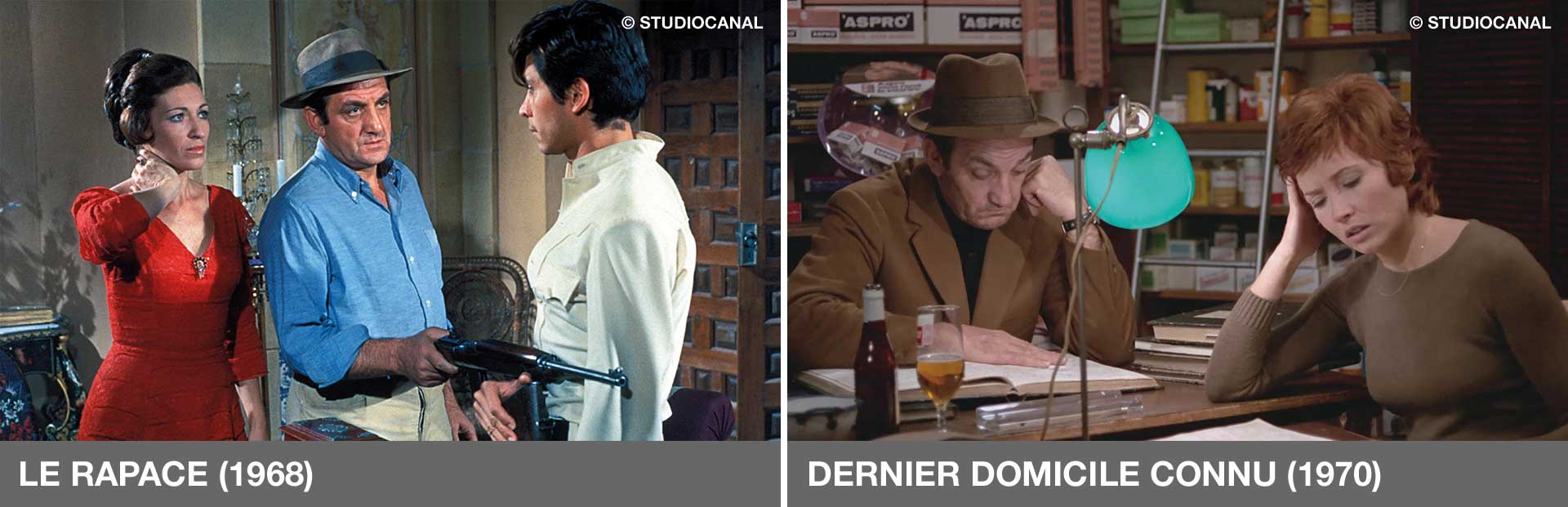
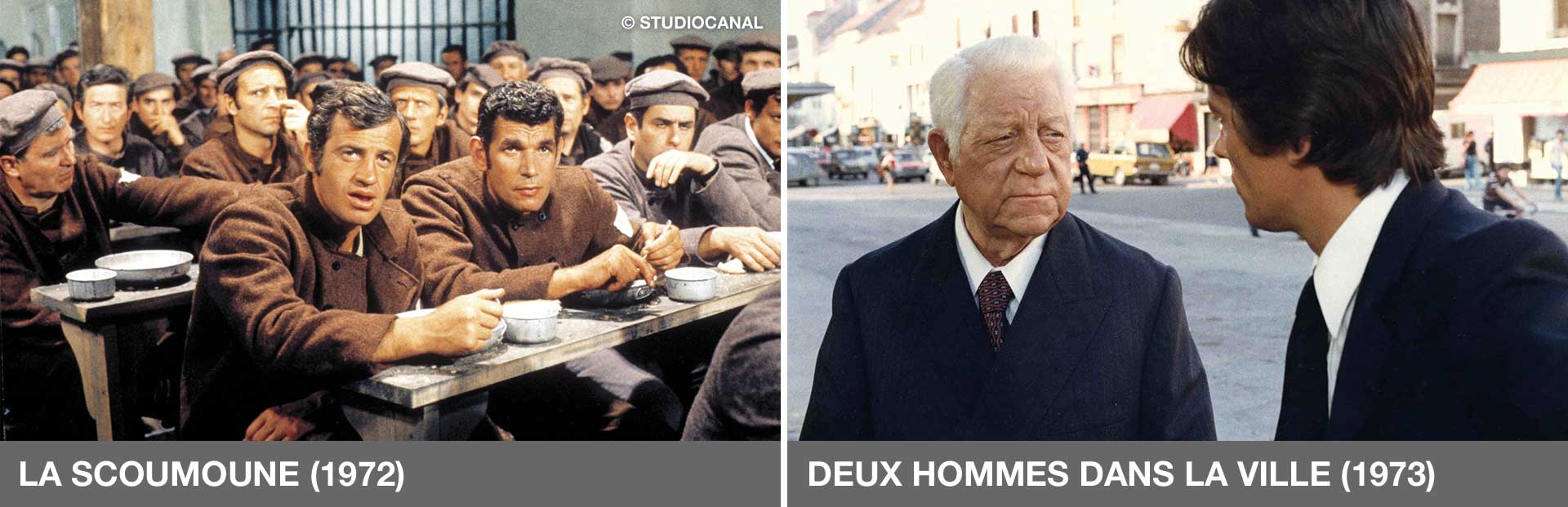
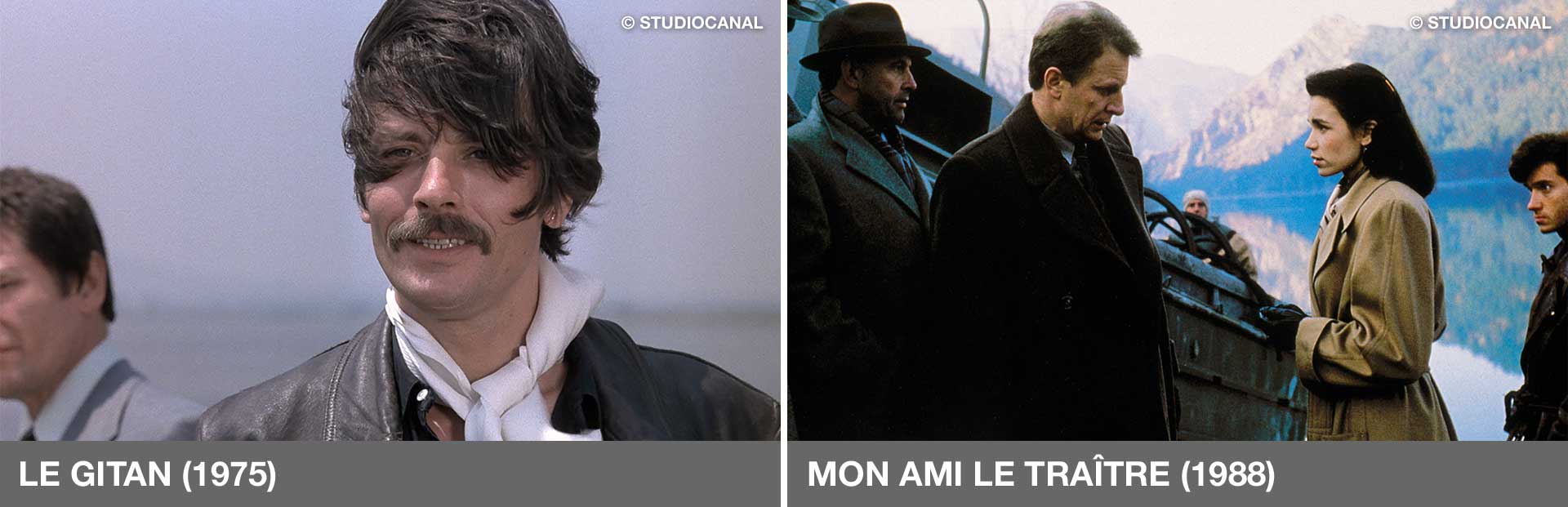
Worthy of note among the fifteen feature films he helmed, as well as two films for television and three episodes of a couple of series, are Le Rapace / Birds of Prey (1968), Dernier domicile connu / Last Known Address (1970) —both with Ventura— Un aller simple / One Way Ticket (1971), La Scoumoune / Hit Man (1972) —with Belmondo, Claudia Cardinale and Giovanni’s actor fetiche, Michel Constantin— Deux hommes dans la ville / Two Men in Town (1973) —with Delon and Gabin co-starring in the film—, Le Gitan / The Gypsy (1975) —produced and played by Delon— and Une robe noire pour un tueur (1981), with Annie Girardot. In his last two films, Mon ami le traître / My Friend the Traitor (1988) and Mon père, il m’a sauvé la vie / My Father Saved My Life (2001)—cowritten with Bertrand Tavernier— he took to fiction to reflect on the decisive aspects that had marked his own life.
A classic film festival
Since 2024, the San Sebastian Festival retrospective has been part of the Klasikoak program, promoted by the Festival and the Filmoteca Vasca as a classic film festival expanded in time and space. Thus, Klasikoak brings together three film cycles under the same label: the films of the retrospective, the Klasikoak section titles screened during the Festival in September, and the twelve restored films programmed by the Filmoteca Vasca in the homonymous cycle over the last quarter of the year at various cultural institutions in the Basque Autonomous Community, Navarre, and the French Basque Country.
Klasikoak is heir to the historic tradition established by the San Sebastian Festival of rediscovering work by filmmakers, periods, themes or film languages, that it put into practice more or less right from the very start, with the retrospective devoted to René Clair in 1959, and the decisive commitment by the Filmoteca Vasca both to restoring and disseminating films.
 Images


















Monday to Sunday from 09:00 to 14:00
and from 16:00 to 20:00